
Can Kidney Stones Cause Kidney Damage? Warning Signs to Know
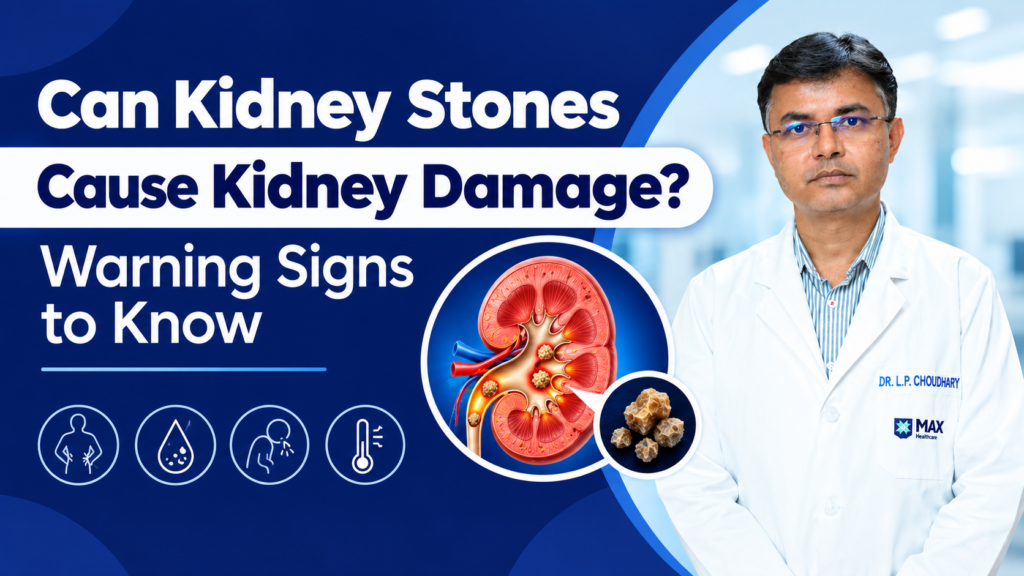
Most people think of a kidney stone as a short, painful episode that ends once the stone passes. For many, that is exactly how it goes. But in some situations a stone lingers, and a stone that stays where it should not be can quietly harm the organ it came from.
The Short Answer
Yes, kidney stones can cause kidney damage, though it is not the usual outcome. Small stones that pass quickly rarely leave a mark. The risk grows when a stone sits for a long time, gets stuck, or when stones keep returning year after year.
How a Blockage Hurts the Kidney
When a stone lodges in the ureter, urine cannot drain and backs up into the kidney, causing swelling known as hydronephrosis. The pressure squeezes the delicate filtering tissue. If the blockage continues for weeks, some of that tissue can be lost permanently, which is why a stone that refuses to pass should never simply be ignored.
Infection Raises the Stakes
Stagnant urine behind a stone is an ideal place for bacteria. An infected, blocked kidney can become seriously ill very quickly, and the infection can spread into the bloodstream. This combination is among the few true emergencies in stone disease.
Slow Scarring From Repeated Stones
Someone who forms stones again and again may not face one dramatic injury. Instead, each episode and each procedure leaves a little scarring, and over many years that can reduce how well the kidneys filter blood.
Who Is at Higher Risk
People with only one working kidney, those with diabetes or existing kidney disease, and anyone with very large stones are more vulnerable. Men with prostate enlargement and people with frequent urinary infections also face greater danger from obstruction.
Warning Signs to Watch
Severe pain in the side or back, fever with chills, repeated vomiting, blood in the urine, and noticeably less urine than usual all deserve prompt attention. Cloudy or foul-smelling urine alongside pain suggests infection, and that needs treatment without delay.
When Damage Is Silent
The trickiest situation is a stone that blocks slowly and causes little pain. A person may feel almost fine while the kidney gradually weakens. Swelling in the feet, tiredness, loss of appetite, or a vague ache may be the only hints, which is why routine scans matter for anyone with a known stone.
How Damage Gets Checked
An ultrasound shows swelling, a scan locates the stone, and blood tests measure kidney function. Visiting a Kidney Specialist in Greater Noida when symptoms linger helps establish whether the kidney is already affected and how urgently the stone needs attention.
Protecting the Kidney
The priority is relieving the blockage, sometimes with a temporary drainage tube before the stone itself is dealt with. Consulting the Best Urologist in Greater Noida means the right procedure is chosen quickly, which gives the kidney its best chance to recover fully, and regular follow-up afterwards helps confirm that function has returned to normal.
Conclusion
Kidney stones are usually painful but harmless in the long run, yet neglected or blocked stones can threaten kidney function. Knowing the warning signs allows you to act in time. Dr. Lok Prakash Choudhary advises anyone with stone pain accompanied by fever, vomiting, or reduced urine to seek care at once, instead of waiting for the pain to settle.